 Jantize
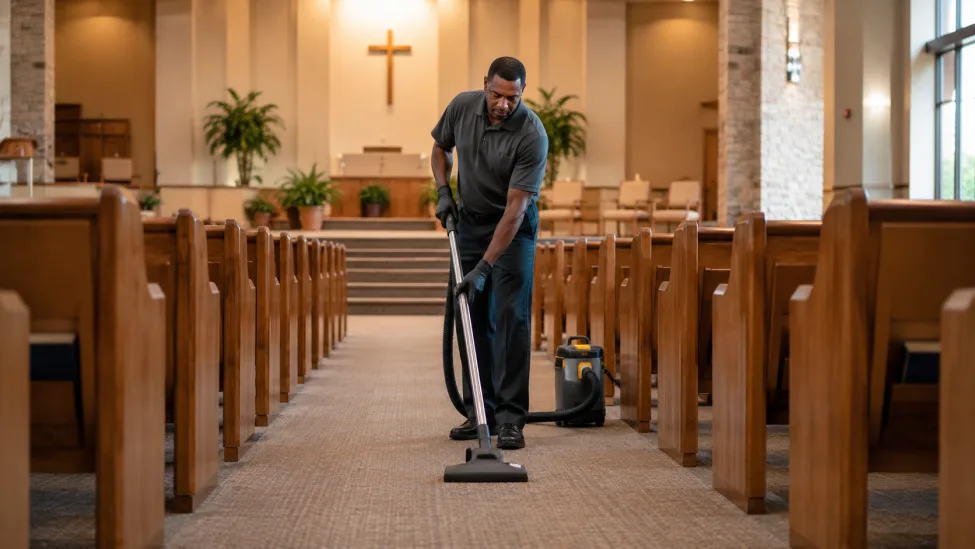
Churches are unlike any other facility a cleaning company will ever work in. They’re places of worship, community gathering, children’s ministry, outreach, and everything in between — often all under the same roof and sometimes all in the same week. The spaces are diverse, the schedules are unpredictable, and the environment calls for a level of care and respect that goes beyond what standard commercial cleaning typically requires.
For Charlotte churches looking for a cleaning partner, here’s what professional church cleaning actually involves and what to look for in a provider.
Why Church Cleaning Is Its Own Category
A church building isn’t used the way an office building is. Worship spaces, classrooms, fellowship halls, commercial kitchens, nurseries, and administrative offices all exist within the same facility — each with different cleaning needs and different levels of traffic throughout the week.
Most Charlotte churches see their heaviest use on weekends, with smaller gatherings, youth programs, and community events filling in throughout the week. That creates a fluctuating pattern of traffic and usage that requires a cleaning schedule flexible enough to keep up without getting in the way of ministry.
Respect for the environment matters here in a way that’s hard to overstate. Cleaning teams work around sanctuaries, altars, musical instruments, and religious items that require careful handling. A provider that understands this — and trains their staff accordingly — makes a meaningful difference.
What Professional Church Cleaning Typically Covers
Every church facility is different, but most professional cleaning plans cover a consistent set of core areas tailored to how the space is actually used.
Worship spaces are cleaned to maintain a neat, orderly appearance — floors vacuumed or mopped, seating dusted, aisles and stages cleared and cleaned. Fellowship halls and multipurpose rooms need attention after events, meals, and community gatherings, which often means post-event cleaning on evenings or weekends.
Classrooms and childcare areas are cleaned with a heightened focus on hygiene, especially in nurseries and spaces where young children spend time. Restrooms receive regular sanitization, and offices and administrative areas are kept to a professional standard. Church kitchens and food prep areas get additional care after events, including surface cleaning and trash removal.
High-Touch Areas and Health
Churches bring together people of all ages and health backgrounds — children, seniors, and individuals with health vulnerabilities all sharing the same spaces. High-touch surfaces like door handles, railings, pew backs, and shared equipment need consistent attention to reduce the spread of germs throughout the congregation.
Restrooms, nurseries, and common areas are especially important. This level of care isn’t unlike what’s required in medical office environments — the same vulnerable populations, the same high-touch surfaces, and the same need for structured, reliable cleaning protocols. During cold and flu season, many Charlotte churches temporarily increase cleaning frequency to help protect their community, and a good provider should be able to accommodate that without making it a complicated process.
Scheduling Flexibility Is Non-Negotiable
If there’s one thing that separates church cleaning from most other commercial cleaning, it’s the scheduling demands. Weekend services, mid-week programs, evening events, and seasonal gatherings can shift the calendar significantly from one week to the next.
Most churches prefer cleaning to happen after services or during off-hours to avoid any disruption to worship or programming. A professional provider needs to be genuinely flexible — not just willing to adjust once in a while, but built to accommodate a schedule that changes regularly. Facilities need to be clean and ready for each gathering regardless of how the week unfolds.
Consistency Across a Complex Facility
Maintaining consistent cleaning standards across a facility with as many different spaces as a typical church is harder than it sounds. Without professional systems in place, certain areas tend to get overlooked — especially during busy seasons or when staffing changes disrupt routine.
Professional providers use documented checklists and supervision to make sure every space gets the appropriate level of care on every visit, not just when someone thinks to check. That consistency is what keeps the facility looking its best week after week and protects the long-term condition of floors, carpets, seating, and fixtures.
Why Professional Cleaning Makes Sense for Churches
Church staff and volunteers have enough on their plates. Ministry, programming, pastoral care, and community outreach are where their energy belongs — not facility maintenance. As we covered in our breakdown of professional vs in-house cleaning, relying on volunteers or informal arrangements for cleaning creates the same consistency and accountability gaps that affect any organization that tries to handle it internally.
Beyond convenience, professional providers bring structure, accountability, and reliability. Trained staff understand how to work respectfully within worship environments while maintaining high cleaning standards. Staffing, training, and coverage are all handled by the provider, and proper insurance and background checks give church leadership and congregants peace of mind.
What to Look for in a Church Cleaning Partner
Experience with faith-based facilities is a meaningful differentiator. A provider that has worked in church environments understands the unique rhythms, spaces, and sensitivities involved — and that experience shows in how they approach the work.
Beyond that, look for clear communication, a genuine willingness to customize services around your facility and schedule, and quality control systems that ensure consistency without requiring constant oversight from your team. A provider that checks in regularly and proactively flags issues is far more valuable than one you only hear from when something goes wrong.
A Few Common Questions
Can cleaning be scheduled around services and events? Absolutely, and it should be. A professional church cleaning provider will build their schedule around your calendar — weekend services, mid-week programs, seasonal events — rather than asking you to work around theirs.
Are cleaning teams trained to work in worship spaces? They should be. Professional providers train staff to work carefully and respectfully within sanctuaries and other sensitive areas, including around altars, musical instruments, and religious items. This is worth asking about specifically before signing a contract.
Does church cleaning include classrooms and childcare areas? Yes. A well-designed church cleaning plan covers the full facility — classrooms, nurseries, educational spaces, and all — with appropriate attention to the hygiene standards those areas require.
A Clean Church Is a Welcoming Church
Your congregation and visitors notice the condition of your facility. Let us handle the cleaning so your team can focus on what matters most. Request a customized quote today and we’ll build a plan that respects your space, fits your schedule, and keeps your facility ready for whatever the week brings.